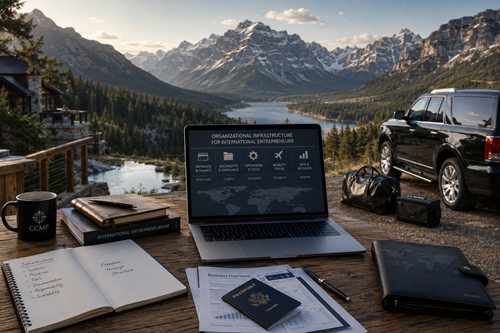

Mobility Is No Longer Only Personal
For many entrepreneurs, international mobility is no longer just a lifestyle choice. It has become part of business strategy. Remote work, international clients, digital services, global conferences, and cross-border partnerships have made travel and geographic flexibility an important element of modern entrepreneurship.
However, mobility creates operational demands. Entrepreneurs must remain reachable, organized, documented, and financially functional while moving between countries. If mobility is not supported by structure, it can quickly become chaotic.
This is why international mobility should be viewed as infrastructure rather than simple travel.
The Business Side of Travel
Entrepreneurial travel differs from leisure travel. A business owner may need reliable internet, secure access to documents, payment continuity, time zone coordination, suitable banking tools, and the ability to handle administrative tasks from abroad. Poor planning can interrupt operations, delay decisions, and create unnecessary stress.
CCMP's approach to mobility focuses on practical business functionality. Travel routes, airline systems, lounge access, cards, documentation, and communication tools are relevant because they affect productivity and continuity.
The purpose is not luxury. The purpose is to make mobility more efficient and less disruptive.
Mobility and Resilience
International mobility can also support resilience. Entrepreneurs who understand different regions, maintain flexible travel options, and prepare alternative locations for work are often better able to adapt to changing conditions.
This does not mean that every entrepreneur needs to be constantly moving. Stability remains valuable. But having the ability to move, reorganize, or operate from different locations can be an important advantage.
A Structured Approach to Global Entrepreneurship
The most successful mobile entrepreneurs are usually not those who improvise everything. They are those who build structure around mobility. They know how they manage documents, payments, communication, schedules, and operational responsibilities while traveling.
International mobility becomes strategically useful when it is organized. Without structure, it creates distraction. With structure, it can become a powerful tool for flexibility, opportunity, and long-term business resilience.